
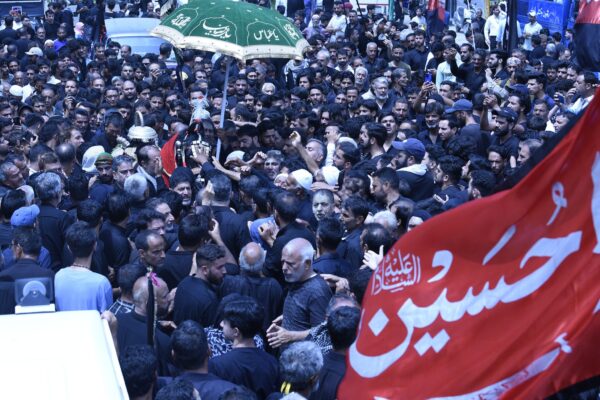
Srinagar: Muslims across the country are observing Yaum-e-Ashura today, the 10th day of Muharram, the first month of the Islamic calendar. The term Ashura is derived from the Arabic word ‘Ashra’, which means ten. The occasion is of utmost significance for both Shias and Sunnis, the two schools of thought among Muslims.
On Ashura, waves of Shiite mourners walk the streets dressed in black, beating their chests or self-flagellating in public grief. Historically, it is the day when Imam Hussain, grandson of the Prophet Muhammad and a central figure in Islam, was killed in the battle of Karbala.
Paying tributes to Imam Hussein, Prime Minister Narendra Modi said his sacrifices inspire people to uphold truth in the face of adversity. “The sacrifices made by Hazrat Imam Hussain (AS) emphasise his commitment to righteousness. He inspires people to uphold truth in the face of adversity,” he said in a post on X.
Sunni Muslims commemorate Ashura through voluntary fasting as commanded by the Prophet Muhammad. The day also marks the Prophet Moses’ parting of the Red Sea. According to prominent Islamic Scholar Omar Suleiman, the Prophet Muhammad observed the Jewish tribes of Medina commemorating this day and felt a closer connection to Moses, celebrating his triumph, thereby asking his followers to observe fasting. It is also associated with the arrival of Prophet Nuh’s (Noah’s) ark, where Allah delivered him to safety.
The Islamic New Year
Muharram, the first and one of the holiest months in the Islamic calendar, marks the beginning of the Hijri New Year. The date is traditionally determined by the sighting of the moon. This year, Muslims in India welcomed the Hijri New Year 1447 AH on June 27.
The day is more solemn than festive. Muharram is one of four sacred months during which Islam forbids warfare, a condition that encourages increased prayer, charity and reflection throughout the month. More than 20 countries, including the United Arab Emirates, Morocco and Syria, have designated the Hijri New Year a national holiday.
While the passage of the Islamic New Year is generally more solemn and introspective than festive, Muslims may observe the holiday differently, according to their school of thought.
The wars in Iran and Gaza will impact observations of the new year. Mass demonstrations of mourning on Ashura are known to unfold in Tehran and other cities in the Shiite-majority Iran. Ashura demonstrations in Pakistan, Lebanon and Iraq have also been a site of tributes to Palestinians. This Hijri New Year is the second to pass since the Israel-Hamas war began in October 2023. Israel’s military offensive in Gaza has since killed more than 55,000 Palestinians, according to the Gaza Health Ministry.