• About
  • Advertise
  • Privacy & Policy
  • Contact
Thursday, June 4, 2026
Daily Nigraan
URDU NEWS
  • Home
  • News
    • Top News
    • Regional
    • City News
  • National
  • World
  • Opinion
  • Business
  • Sports
  • Health
  • Education
  • ePaper
No Result
View All Result
  • Home
  • News
    • Top News
    • Regional
    • City News
  • National
  • World
  • Opinion
  • Business
  • Sports
  • Health
  • Education
  • ePaper
No Result
View All Result
Daily Nigraan
No Result
View All Result
Home Top News

As PM Modi Pitches ‘Secular’ Civil Code, Where Does The UCC Debate Stand? 

by Nigraan News Desk
August 19, 2024
in Top News
0
PM Modi nominates 10 people including J&K CM Omar Abdullah to strengthen fight against obesity

PM Modi nominates 10 people including J&K CM Omar Abdullah to strengthen fight against obesity

FacebookTwitterWhatsapp

Over the years, the BJP has made multiple pitches for a Uniform Civil Code. However, consensus on such a law remains elusive

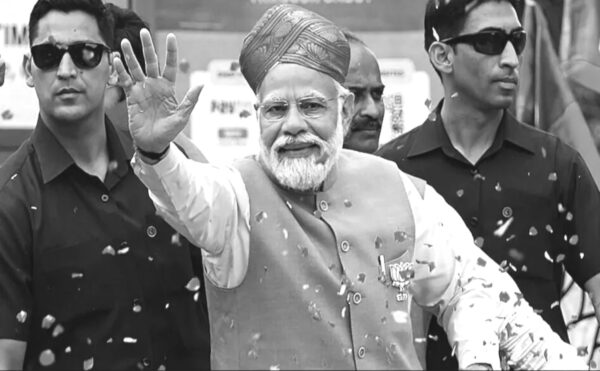
 In his Independence Day speech, Prime Minister Narendra Modi reignited the debate over a Uniform Civil Code (UCC) for the country. This time, however, he pitched the controversial proposal with a twist, calling it the ‘secular’ civil code. 

The play of words by the PM was aimed at defusing one of the biggest arguments of the Opposition that the UCC was a majoritarian means to undermine the identity of minority communities, keep the communal pot boiling, and create hatred and polarisation.  

UCC is meant to be a set of laws on civil matters like inheritance, marriage, adoption, succession, and divorce which are currently governed by personal laws of various groups. UCC would be applicable to all citizens irrespective of their religion, community, race, sex and caste. In March this year, Uttarakhand became the first state to implement UCC. However, it was met with protests by several groups. 

Debates in Constituent Assembly 

Debates around the Uniform Civil Code have remained inconclusive since it was first raised in the Constituent Assembly. On November 23, 1948, the Constituent Assembly witnessed a heated discussion. M Muhammad Ismail, Naziruddin Ahmad and Pocker Sahib Bahadur – members of the Muslim League – argued that no community that have been adhering to their own personal laws should be forced to give those up for the actualisation of UCC. Meanwhile, K M Munshi, Alladi Krishnaswami and BR Ambedkar – supporters of the proposal – contested that this was an “isolationist outlook” towards life.  

Ambedkar, the Chairman of the Drafting Committee of the Constitution and the last person to speak on the issue, empathised with the Muslim side and conveyed to them that he recognised their feelings. However, he disagreed with their argument that the Muslim personal law was immutable and uniform throughout India. He said that the enactments of the common criminal and civic laws “prove that this country has practically a Civil Code, uniform in its content and applicable to the whole of the country”. 

Ultimately, the debate was so lengthy and heavily contested that the authors of the Indian Constitution left the making of the code for the future and it never became a law. What finally went on the Uniform Civil Code in Part 4, Article 44 of the Indian Constitution reads as follows: “The State shall endeavour to secure for the citizens a uniform civil code throughout the territory of India.” 

BJP’s quest for UCC 

For the Bharatiya Janata Party (BJP), UCC is part of its core ideological agenda, with the push for it having started in the 1950s, during its Jan Sangh days. However, it was after the Supreme Court’s judgement in the Shah Bano case in 1985 that the party’s clamour for UCC grew louder.  

When protests erupted among conservative Muslim sections over the Supreme Court ruling that Shah Bano, a divorced Muslim woman with five children, was due alimony from her former husband beyond the period of three months (Iddat), the then Prime Minister Rajiv Gandhi had used his party’s parliamentary majority to counteract the judgement. He introduced the Muslim Women (Rights to Protection on Divorce) Act, 1986, by which Muslim women were excluded from right to maintenance. The BJP and Sangh Parivar saw it as an opportunity to gain ground among Hindus.

Ahead of the 1989 Lok Sabha polls,  the implementation of UCC featured on the BJP’s manifesto for the first time. It featured again in its subsequent poll manifestos in 1991, 1998, 2004, 2019 and 2024. With Ram Mandir complete and Article 370 scrapped, it is now on top on the list of core agenda items. 

What has Supreme Court said on UCC? 

Over the years, the Supreme Court has taken up the discussion on UCC a number of times–each time resulting in an inconclusive verdict. The first time that the top court called for the implementation of a common civil code was during the Shah Bano case. The court had asked the government to “have a fresh look at Article 44 of the Constitution of India and endeavour to secure for the citizens a uniform civil code throughout the territory of India.” It was brought up again during the Sarla Mudgal case (1995). But the issue remained dormant for years as its implementation is beyond the remit of courts. 

In recent years, the SC has reiterated a few times that UCC was an “unaddressed constitutional expectation”. While giving its landmark verdict on Triple Talaq, the top court said that there was no connection between religious and personal laws in civil society and urged the State to provide a UCC. 

What has the Law Commission said? 
In 2018, in a 185-page consultation paper on the reform of family law, the 21st Law Commission, headed by former Karnataka High Court Chief Justice Ritu Raj Awasthi, stated that UCC “is neither necessary nor desirable at this stage”. The report also recommended that discriminatory practices, prejudices, and stereotypes within religions and personal laws should be studied and amended. 

Last year, the 22nd Law Commission, which was tasked with the drafting of a bill, held discussions with people and communities/stakeholders across the country to seek opinions and suggestions on the UCC. The deadline for the same ended on July 28, 2023. However, as per reports, the commission is yet to complete all the consultations. 

In recent years, the SC has reiterated a few times that UCC was an “unaddressed constitutional expectation”. While giving its landmark verdict on Triple Talaq, the top court said that there was no connection between religious and personal laws in civil society and urged the State to provide a UCC. 

What has the Law Commission said? 

In 2018, in a 185-page consultation paper on the reform of family law, the 21st Law Commission, headed by former Karnataka High Court Chief Justice Ritu Raj Awasthi, stated that UCC “is neither necessary nor desirable at this stage”. The report also recommended that discriminatory practices, prejudices, and stereotypes within religions and personal laws should be studied and amended. 

Last year, the 22nd Law Commission, which was tasked with the drafting of a bill, held discussions with people and communities/stakeholders across the country to seek opinions and suggestions on the UCC. The deadline for the same ended on July 28, 2023. However, as per reports, the commission is yet to complete all the consultations. 


GABFIRE

Related Posts

Lieutenant Governor Hands Over Appointment Letters to Newly Appointed Constables of J&K Police

Lieutenant Governor Hands Over Appointment Letters to Newly Appointed Constables of J&K Police

May 20, 2026
Lieutenant Governor Joins Nasha-Mukt J&K Campaign in Pulwama

Lieutenant Governor Joins Nasha-Mukt J&K Campaign in Pulwama

May 19, 2026
Over 2 lakh outreach programmes held across J&K against drug menace: LG Sinha

Over 2 lakh outreach programmes held across J&K against drug menace: LG Sinha

May 12, 2026
Over 2 lakh outreach programmes held across J&K against drug menace: LG Sinha

Join May 3 Padyatra at TRC Stadium”, LG Manoj Sinha Calls for Mega Anti-Drug March in Srinagar

May 2, 2026
First Batch Of 431 Haj Pilgrims Leaves From Jammu And Kashmir

First Batch Of 431 Haj Pilgrims Leaves From Jammu And Kashmir

April 18, 2026
After Art 370 abrogation, Constitution fully applicable across entire nation: PM Modi

After Art 370 abrogation, Constitution fully applicable across entire nation: PM Modi

April 14, 2026
Next Post
NC doles out Poll Manifesto: Promises 200 units free electricity, restoration of political, legal status of J&K

NC doles out Poll Manifesto: Promises 200 units free electricity, restoration of political, legal status of J&K

NC doles out Poll Manifesto

NC doles out Poll Manifesto

BJP Jammu and Kashmir Releases List of Prabharies for Assembly Constituencies of Kashmir Region

BJP Jammu and Kashmir Releases List of Prabharies for Assembly Constituencies of Kashmir Region

Facebook Twitter Youtube

About Us

Daily newspaper published from Kashmir

CONTACT OUR STAFF

Our Staff ready in this line:

Email Support: [email protected]

ADV HERE

Our Staff ready in this line:

Email Support: [email protected]

© Daily Nigraan - Designed by Gabfire.

No Result
View All Result
  • Home
  • News
    • Top News
    • Regional
    • City News
  • National
  • World
  • Opinion
  • Business
  • Sports
  • Health
  • Education
  • ePaper

© Daily Nigraan - Designed by Gabfire.

This website uses cookies. By continuing to use this website you are giving consent to cookies being used. Visit our Privacy and Cookie Policy.