
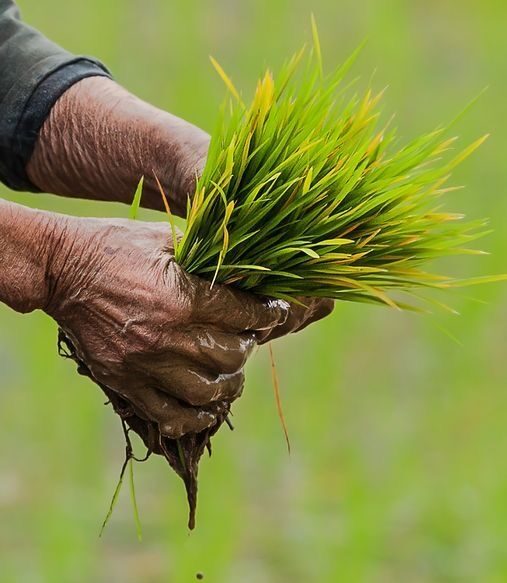
Quality seeds have been at the heart of the agricultural revolution in India, playing a critical role in transforming the country from a food-deficient nation to one that is self-sufficient. The introduction of high-yielding varieties (HYVs) of wheat and rice during the Green Revolution marked a significant turning point in Indian agriculture. These quality seeds, developed through intensive breeding programs, enabled farmers to achieve unprecedented crop yields, laying the foundation for food security and poverty reduction across the nation.
As per Third Advance Estimates of Production of Food Grains for 2023-24, country has 154.5 million tonnes of cereals, 24.5 million tonnes of pulses, 39.5 million tonnes of oilseeds, 328.8 million tonnes of food grains and 442.5 million tonnes of Sugarcane production. However, as new challenges such as climate change, food and nutritional insecurity, and resource depletion emerge, the role of quality seeds has become even more crucial.
Food and nutritional insecurity remain pressing issues in many parts of India. Quality seeds, especially biofortified seeds, offer a promising solution to this challenge. Biofortified seeds are designed to produce crops enriched with essential vitamins and minerals, such as iron, zinc, and Vitamin A, which are often deficient in the diets of millions of Indians, particularly in rural areas. For instance, biofortified varieties of staple crops like rice, wheat, and maize can significantly reduce micronutrient deficiencies, which are a major cause of malnutrition.
The National Family Health Survey (NFHS-5) reveals that nearly 67 per cent of children under five in India suffer from anaemia, largely due to iron deficiency. The widespread adoption of biofortified crops can make a substantial impact on public health, reducing malnutrition and improving the overall well-being of the population.

Building Climate Resilience in Agriculture
Climate change poses a significant threat to global agriculture, with Indian farmers particularly vulnerable to its impacts. Climate change is manifesting through increased temperatures, erratic rainfall patterns, and more frequent extreme weather events, all of which disrupt crop production. The Economic Survey of India estimates that climate change could reduce annual agricultural incomes by 15 to 18 per cent on average, with losses in unirrigated areas potentially as high as 20 to 25 per cent. In this context, the development and use of quality seeds that are climate-resilient become vital.
These seeds are bred for traits such as drought tolerance, heat resistance, and flood tolerance, enabling farmers to maintain productivity even under adverse environmental conditions. For example, drought-tolerant varieties of crops like maize and pulses ensure that farmers in water-scarce regions can still achieve reasonable yields, securing their livelihoods and sustaining agricultural production.

Addressing Resource Depletion
Resource depletion, particularly the overuse of water and soil degradation, is another critical challenge that quality seeds can help mitigate. The excessive extraction of groundwater for irrigation and the heavy use of chemical fertilisers and pesticides have led to significant environmental degradation in many parts of India. Quality seeds, especially those adapted to local agro-climatic conditions, can reduce the need for these inputs.
Seeds bred to be more efficient in water use can help conserve this valuable resource, while those resistant to pests and diseases can minimise the need for chemical pesticides. These practices not only contribute to the sustainability of agriculture but also help preserve the environment for future generations.
Improving Farmers’ Incomes
Quality seeds are also essential for improving farmers’ incomes, which is crucial for the overall development of rural India. Higher yields from quality seeds directly translate into increased production, which boosts farmers’ incomes. Furthermore, cultivating high-value crops, such as those derived from biofortified seeds, can open new market opportunities for farmers. These crops often fetch premium prices, particularly in markets that prioritise nutritional content. The increased income from these crops can help lift farmers out of poverty and improve their overall quality of life.
Additionally, the reduction in input costs associated with the use of quality seeds—such as lower requirements for water, fertilisers, and pesticides—can further enhance farmers’ profitability.

Role of ICAR, State Agricultural Universities and National Seed Corporation
The Indian Council of Agricultural Research (ICAR), State Agricultural Universities (SAUs), and the National Seed Corporation (NSC) have been instrumental in the development and distribution of quality seeds that address these challenges. Since its establishment in 1963, the NSC has been dedicated to producing and supplying high-quality seeds to farmers across India. The corporation played a crucial role in the Green Revolution and continues to contribute to agricultural advancements by ensuring the availability of certified seeds that meet stringent quality standards. ICAR, in collaboration with SAUs, leads the nation’s agricultural research and development efforts.
These institutions have been at the forefront of breeding new crop varieties that are high-yielding, climate-resilient, and biofortified, ensuring that farmers have access to seeds that meet their specific needs and are adapted to local agro-climatic conditions.
Significance of the 109 Crop Varieties
The recent release of 109 high-yielding, climate-resilient, and biofortified crop varieties by Prime Minister Narendra Modi at the ICAR-Indian Agricultural Research Institute marks a significant milestone in Indian agriculture. Among these 109 released varieties, 69 varieties are for the field crops (cereals: 23, pulses: 11, oilseeds and fodder: 7 each, sugar crops: 4, fibre crops: 6 and potential crops: 11) while 40 varieties are for the horticultural crops (fruits and vegetables: 8 each, tuber crops: 3, spices and plantation crops: 6 each, flowers: 5 and medicinal crops:4).
These varieties are released for kharif, rabi, summer and off-season planting suitable for cultivation in irrigated, rainfed, late sown rainfed and timely sown rainfed/irrigated situations in plains, coastal and hilly regions, indicating wider adaptability of some of these varieties across time and space which enables farmers to take up such crops in diverse agro-ecologies and seasons.
The National Agricultural Research and Education System (NARES) through its extensive network of widely located ICAR institutes and State Agricultural Universities (SAUs) in diverse agro-ecological zones of the country has developed crop varieties and farming practices to enhance the farmers’ capability to combat against different abiotic and biotic stresses. On addressing various abiotic stresses, these varieties ensure stable yield and thereby income in the events of salinity, dry spell, aerobic and upland environment, low phosphorus content in the soils, limited irrigation water availability, submergence and terminal heat stress situations.

Many of these varieties are tolerant to range of insect pests and diseases which ensure minimal yield losses in the events of variety of biotic stresses, which not only ensures stable yield to the farmers but also curtail their expenditure on agro-chemicals which also helps in dumping harmful chemicals in the environment and soil and helping the agriculture to march on the green path. Additionally, the evolving agronomic practices coupled with the availability of the seeds, which can be sown either late or early to escape the crop from initial and terminal abiotic stresses like dry spells and heat stresses, have really enhanced the risk bearing ability of the Indian farmers.
Table 1 summarises the categories/situation under which these 109 released varieties of different crops would fall down, traits they possess and their implications.
| Category | Traits | Significance |
| Abiotic Stress Tolerance | Salt tolerance, submergence tolerance, heat stress tolerance, drought tolerance, low phosphorus tolerance, water stress tolerance |
|
| Biotic Stresses Tolerance | Disease and insect-pest tolerance | Stable yield during the event of disease incidences and insect-pest attack |
| Biofortified Varieties | Zinc, iron, protein, vitamins, minerals, fibres, amino-acids and antioxidants | Higher nutritional availability to the consuming population |
| Traits of Economic Importance | High oil content, high sucrose content, uniform shape and colour, longer shelf life, multipurpose usage, multiple harvesting/cutting, suitable for farm mechanisation, early fruiting |
|
| Suitable Ecologies | Plains, hills, coastal regions | Wider adaptability |
| Suitable Seasons | Kharif, Rabi, summer and off-season | Wider adaptability |
On the nutrition front, many of these newly released crop varieties are biofortified with zinc, iron, protein, vitamins, fibre, other minerals, antioxidants, and amino acids, while maintaining stable taste—crucial for producing and delivering nutritious food for good health. These biofortified crop varieties not only ensure higher nutritional availability but also support the Government of India’s “Eat Right India” movement, which aims to transform the country’s food system to ensure safe, healthy, and sustainable food for all.

Further, the Indian agriculture is witnessing labour shortage in many parts of the country. In this context, we have started marching towards mechanising our farms in step-wise manner. In the first stage, we have introduced the machinery to carry out different farm operations. At the second stage, we have modified our plant architecture (for example NBG 1267 variety of Chana) and cultivation practices using different breeding and agronomic approaches to complement the farm machineries in efficiently carrying out various farm operations. The third stage is about the orientation of our small farm holdings to accommodate large farm machineries. Though consolidation of farms is being in practice by some of the cooperatives and farmer producer companies (FPCs), but this is still at the nascent stage to reap the true benefits of mechanisation of Indian farms.
On the income support front, many of these crop varieties not only yield higher outputs but also produce quality results. Additionally, the architecture of many crops has been modified to support greater production from the same area of land. Many fruit varieties now have a longer shelf life, ensuring they can be transported to distant locations without quality deterioration. Some fruit varieties, such as Arka Uday mangoes, have a uniform shape and colour, while others, like the Lalit variety of guava, are tailored for processing, allowing farmers to secure higher returns. The architecture of various mango varieties has also been adapted to enable high-density planting, accommodating more plants per orchard and thereby increasing production and income.
This initiative is a testament to Union Minister of Agriculture and Farmers Welfare Shivraj Singh Chouhan’s expansive vision, grounded in his agricultural roots, and the government’s commitment to advancing agricultural sustainability, improving food and nutritional security, and enhancing farmers’ livelihoods. These new crop varieties are bred not only to deliver higher yields but also to withstand the adverse effects of climate change, ensuring that farmers can maintain productivity even under challenging conditions. Additionally, the biofortified varieties are designed to address nutritional deficiencies prevalent in many parts of India, contributing to improved public health outcomes.
Implications for Indian Agriculture
The introduction of these new crop varieties holds profound implications for Indian agriculture. By enhancing agricultural productivity, these varieties help ensure food security for the nation, reducing the risk of food shortages amid a growing population and limited arable land. The higher nutritional value of biofortified crops also plays a critical role in reducing healthcare costs associated with malnutrition, contributing to a healthier and more productive workforce. Furthermore, the adoption of these varieties can stimulate rural economies by creating new opportunities for value-added agricultural products and export markets.
Advancing Environmental Sustainability
Beyond economic benefits, these new crop varieties are crucial for promoting environmental sustainability. By thriving in diverse and often challenging agro-climatic conditions, these crops help maintain soil health and biodiversity, fostering a more sustainable agricultural system. The reduction in the need for chemical inputs like pesticides and fertilisers further protects ecosystems from degradation, ensuring that agriculture can continue to flourish without causing environmental harm.
Conclusion

In conclusion, the significance of quality seeds in Indian agriculture cannot be overstated. From their role in the Green Revolution to their importance in combating food and nutritional insecurity, climate change, resource depletion, and improving farmers’ incomes, quality seeds are the foundation upon which the future of Indian agriculture rests. The efforts of ICAR, State Agricultural Universities, and the National Seed Corporation in developing and distributing these seeds have been instrumental in advancing the nation’s agricultural capabilities. The recent release of 109 high-yielding, climate-resilient, and biofortified crop varieties by Prime Minister Modi represents a significant step forward in this ongoing journey.

By integrating these advancements in seed technology with broader goals of sustainability and food security, India is well-positioned to address future challenges and ensure a prosperous and resilient agricultural sector for generations to come.
News 18 English