Nigraan Dask}
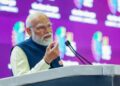
Srinagar July 25, 2025 — Prime Minister Narendra Modi today achieved a major political milestone, becoming the second longest-serving Prime Minister in India’s history. With 4,078 consecutive days in office, he has now overtaken Indira Gandhi’s record of 4,077 days. Only Jawaharlal Nehru, who served uninterrupted from 1947 to 1964, has held the office longer.
This landmark moment comes during Modi’s unprecedented third consecutive term as Prime Minister — a rare feat in Indian democracy. He is not only the first non-Congress leader to reach this milestone but also the first Prime Minister born after Independence to serve such an extended term.
Narendra Modi’s political journey began in Gujarat, where he served as Chief Minister from 2001 to 2014. He rose to national prominence by leading the Bharatiya Janata Party (BJP) to a historic victory in the 2014 general elections, and subsequently secured re-election in 2019 and again in 2024, each time with a clear majority in the Lok Sabha. This makes him the only non-Congress Prime Minister to complete two full terms and return for a third with a full mandate.
Modi’s tenure has been marked by several historic firsts. He is the longest-serving Prime Minister from outside the Congress party, and the first from a non-Hindi-speaking state to hold the position for more than two terms. He is also the only Indian political leader to win six consecutive elections as party leader — three at the state level in Gujarat and three nationally. Since Indira Gandhi in 1971, no Prime Minister before him had returned to power with a full majority, a feat Modi achieved twice. Under his leadership, the BJP has won three consecutive Lok Sabha elections, a streak previously achieved only by Nehru for the Congress.
Born in Vadnagar, a small town in Gujarat, into a modest family, Modi’s rise from helping his father sell tea at railway stations to leading the world’s largest democracy is often cited as a remarkable journey of perseverance and self-discipline. Known for his powerful oratory and strong grassroots connect, Modi has built a political brand centered on development, nationalism, and governance.
Over the years, he has repositioned India on the global stage, placing strong emphasis on economic reforms, infrastructure growth, digital innovation, and cultural pride. His leadership has often been credited with centralising power while driving large-scale policy shifts aimed at modernising India’s economy and institutions.
Political analysts see this milestone as more than a measure of time — it reflects Modi’s enduring appeal, adaptability, and capacity to lead through changing political landscapes. His two-decade-long governance journey, both in Gujarat and at the Centre, marks him as one of the most influential leaders in post-independence India.
As he advances into the third term of his premiership, Prime Minister Modi’s legacy continues to evolve — one defined by continuity, consolidation, and sustained political dominance in modern Indian history.